
Delayed Diagnosis or Treatment of Stroke: The Role of Neuropsychological Evidence in Clinical Negligence Claims
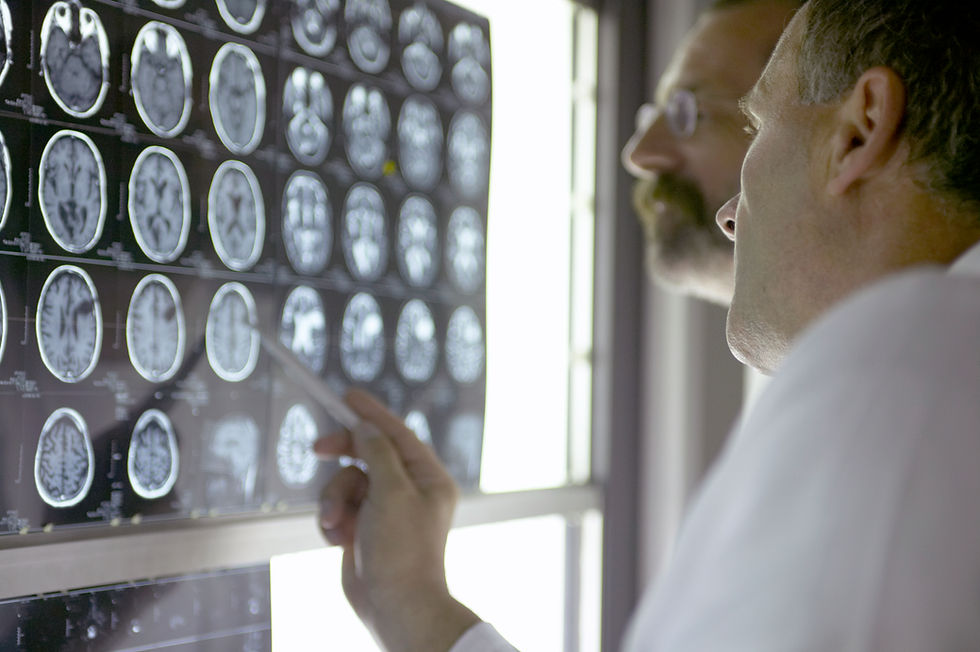
In clinical negligence claims involving delayed diagnosis or treatment of stroke, establishing the consequences of an alleged delay can be particularly complex.
A claimant may have sustained a significant neurological injury, but this does not necessarily mean that all the resulting difficulties are attributable to the alleged negligence. Some impairment may have occurred even if the stroke had been recognised and treated promptly.
For solicitors, the question is therefore not simply what difficulties the claimant experiences now, but whether those difficulties would probably have been different in the absence of the alleged delay.
Where cognitive functioning is affected, specialist neuropsychological evidence may assist in examining the nature and extent of impairment, its consequences for everyday life and the extent to which the findings can inform the wider causation analysis.
A Consultant Clinical Neuropsychologist can contribute to this process alongside medical experts addressing the underlying stroke, the treatment provided and the likely consequences of alternative clinical management.
Why Can Delayed Stroke Diagnosis or Treatment Lead to Clinical Negligence Claims?
Stroke is a time-sensitive neurological emergency. Depending upon the type of stroke and the individual circumstances, prompt recognition, investigation and treatment may influence the extent of neurological injury and subsequent recovery.
In ischaemic stroke, for example, certain patients may benefit from treatments intended to restore blood flow, including thrombolysis or mechanical thrombectomy.
However, eligibility depends upon several factors, including the clinical presentation, imaging findings, treatment timing and other relevant medical considerations.
Not every patient is suitable for these interventions, and earlier diagnosis does not necessarily mean that a particular treatment would have been appropriate or successful.
The importance of timely assessment and appropriate treatment is reflected in NICE guideline NG128: Stroke and transient ischaemic attack in over 16s.
Clinical negligence claims may arise where it is alleged that symptoms were not recognised, investigations were delayed, specialist referral was not obtained or appropriate treatment was not provided within a clinically relevant period.
The questions of breach of duty and medical causation require evidence from appropriately qualified medical experts.
However, where an alleged delay is said to have resulted in additional neurological injury, a further question may arise: what additional cognitive or functional consequences, if any, has the claimant experienced?
This is where neuropsychological evidence may become relevant.
The Central Causation Question: What Would Have Happened Without the Delay?
In a delayed-treatment stroke claim, the claimant's current condition represents only one part of the evidential picture.
The other concerns the likely outcome had the relevant diagnosis or treatment occurred at the appropriate time.
This hypothetical alternative outcome is often described as the counterfactual.
For example, a claimant may now experience substantial difficulties with memory, processing speed, planning and concentration. Those difficulties may be consistent with the neurological injury sustained.
Nevertheless, that finding does not establish whether all, some or none of the cognitive impairment resulted from the alleged delay.
The analysis may require consideration of three distinct questions:
What neurological and cognitive consequences has the claimant actually experienced?
What neurological injury would probably have occurred even with appropriate and timely treatment?
What additional consequences, if any, can reasonably be attributed to the difference between the actual and hypothetical outcomes?
These questions involve overlapping but distinct areas of expert evidence. A stroke physician, neurologist or other appropriately qualified medical expert may address the likely effects of earlier intervention on the underlying neurological injury. Neuroradiological evidence may assist in understanding the location and extent of cerebral damage.
A clinical neuropsychologist may then examine the claimant's cognitive functioning and consider how the established or hypothesised neurological outcomes relate to the cognitive findings.
The distinction is important. Neuropsychological testing cannot independently establish that earlier treatment would have prevented a particular brain injury. Nor can it reconstruct with certainty the cognitive abilities a claimant would have retained under a different treatment pathway.
Its contribution is to provide specialist evidence about cognition and functioning within the framework established by the wider medical evidence.
What Can Neuropsychological Assessment Establish After Stroke?
Stroke can affect cognitive abilities in ways that are not always apparent from physical examination or ordinary conversation.
An individual may have relatively good mobility and speech yet struggle with activities requiring sustained attention, memory, organisation or flexible thinking.
A detailed neuropsychological assessment may examine several areas of cognition, depending upon the individual's presentation and the questions raised by the litigation.
Attention and Information Processing
Difficulties with attention and processing speed may affect a claimant's ability to follow conversations, manage competing tasks or work efficiently.
These difficulties can have particular significance for individuals whose previous employment required sustained concentration, rapid decision-making or the ability to manage complex information.
Memory and Learning
Stroke may affect the ability to acquire, retain or retrieve information.
However, apparent memory difficulties can also reflect problems with attention, information processing or executive functioning.
A neuropsychological assessment can help identify the nature of the difficulty rather than treating all reported memory problems as equivalent.
Executive Functioning
Executive functions include planning, organisation, judgement, inhibition, problem-solving and the ability to adapt behaviour when circumstances change.
Impairment may affect everyday independence, particularly when an individual is required to organise unfamiliar tasks, manage finances or make complex decisions.
Such difficulties may not be readily detected through brief cognitive screening.
Language, Perception and Other Cognitive Abilities
Depending upon the location and extent of the stroke, difficulties may also involve language, visuospatial processing, visual attention or other aspects of cognition.
These impairments can influence performance on neuropsychological tests and must be considered when interpreting the findings.
The overall assessment should therefore be tailored to the claimant's neurological presentation, rather than relying upon a fixed set of tests administered without regard to the clinical circumstances.
The National Clinical Guideline for Stroke recognises the importance of detailed cognitive assessment following stroke, particularly where difficulties are subtle or affect complex everyday activities.
In medico-legal practice, the assessment must additionally address the specific questions arising from the litigation.
Why Neuroimaging Alone Cannot Establish Cognitive Consequences
Brain imaging plays an essential role in the diagnosis and medical assessment of stroke.
It may identify the location, extent and nature of cerebral injury and provide important information for medical causation. However, imaging does not directly measure cognitive functioning.
Two individuals with apparently similar radiological findings may experience different cognitive and functional outcomes. Equally, a claimant may have difficulties that are not adequately captured by a brief neurological examination.
This does not mean that neuropsychological findings can be interpreted independently of imaging. The two sources of evidence should inform one another.
For example, the location of an established cerebral lesion may help the neuropsychologist consider whether a particular pattern of impairment is clinically plausible.
Nevertheless, a pattern of cognitive test results is not sufficiently specific to demonstrate that an alleged treatment delay caused an identifiable extension of brain injury.
Where the question concerns the likely effects of earlier treatment on the size or location of a stroke, the neuropsychologist must remain within the limits of their expertise and consider the opinions of the relevant medical specialists.
Distinguishing the Effects of Stroke from the Effects of Alleged Negligence
One of the most important distinctions in delayed-treatment litigation is between the consequences of the underlying medical event and any additional harm attributable to the alleged negligence.
A stroke may cause significant impairment even where clinical care is entirely appropriate. Conversely, a delay in treatment may materially alter the outcome in some cases. Whether that occurred in an individual case requires careful medical analysis, supported by the relevant evidence.
Neuropsychological assessment can contribute by establishing the claimant's current cognitive profile and considering its consistency with the neurological findings.
Where medical experts have identified a credible difference between the actual and counterfactual neurological outcomes, the neuropsychologist may also be able to comment on the likely cognitive and functional significance of that difference.
However, the precision of such an opinion will depend upon the available evidence.
It may be possible to identify a likely difference in the severity of cognitive impairment without being able to specify exactly how the claimant would have performed on individual cognitive tests.
In other cases, the evidence may be insufficient to distinguish reliably between cognitive difficulties attributable to the stroke itself and those potentially attributable to delayed treatment.
An appropriately qualified expert opinion should make those limitations explicit.
An Illustrative Example: Stroke, Cognitive Impairment and Return to Work
Consider a hypothetical claimant who experiences an ischaemic stroke and subsequently reports persistent difficulties with concentration, processing speed and organisation.
Before the stroke, the claimant worked in a demanding professional role involving the management of multiple projects, complex information and frequent decision-making.
Following rehabilitation, the claimant regains physical independence but is unable to sustain their previous occupational responsibilities.
A neuropsychological assessment identifies difficulties with processing speed, divided attention and aspects of executive functioning. These findings are consistent with the claimant's reported problems at work. That assessment may provide important evidence about the nature and functional consequences of the cognitive impairment.
However, suppose the clinical negligence claim concerns an alleged delay in recognising the stroke and providing treatment.
The neuropsychological findings alone do not demonstrate that the claimant would have returned to their previous occupation if treatment had been provided earlier.
Medical expert evidence would first need to consider whether earlier treatment would probably have produced a different neurological outcome. The neuropsychologist could then address the potential implications of the medically supported alternative outcome for cognition and occupational functioning, to the extent that the evidence permits.
This illustrates why the assessment of current impairment and the attribution of additional impairment are related but separate questions.
The Importance of Pre-Stroke Functioning
Understanding the claimant's cognitive abilities before the stroke is particularly important when assessing the extent and significance of subsequent changes.
There may be no formal neuropsychological assessment from before the neurological event.
The expert may therefore need to consider other sources of information, including educational history, employment, previous medical records, accounts of everyday functioning and evidence from people who knew the claimant before the stroke.
These sources can assist in estimating premorbid abilities, although retrospective accounts must be interpreted with appropriate caution.
It is also important to consider pre-existing conditions or difficulties that may have affected cognitive functioning independently of the stroke. For example, previous neurological illness, cognitive decline, psychiatric symptoms or other medical conditions may be relevant.
These factors do not negate the possibility of additional impairment following stroke. They form part of the evidence needed to distinguish pre-existing limitations from subsequent changes.
The expert's task is to provide a reasoned interpretation rather than assume that all differences between estimated premorbid functioning and current test performance are attributable to the event under litigation.
Cognitive Impairment, Everyday Functioning and Future Loss
The consequences of stroke may extend beyond the impairments identified through formal testing.
A claimant may achieve reasonable scores on certain cognitive measures yet struggle to manage the demands of employment, family responsibilities or independent living.
Conversely, reduced performance on a particular test does not necessarily establish a corresponding degree of functional disability.
The significance of the findings depends upon the individual's circumstances and the demands of everyday activities.
A neuropsychological assessment may therefore draw upon occupational information, rehabilitation records, clinical observations and collateral evidence to understand how identified difficulties manifest outside the assessment setting. This may assist the court in considering questions concerning employment, independence, rehabilitation and future care.
In delayed-treatment cases, however, an additional distinction remains necessary.
The claimant's current support needs or occupational limitations may be well established, while the extent to which those needs would have existed with timely treatment remains disputed.
Neuropsychological evidence should therefore distinguish between describing present functional consequences and attributing those consequences to the alleged negligence.
Both may be relevant to the litigation, but they are not interchangeable.
When Should Solicitors Instruct a Neuropsychologist in a Delayed Stroke Treatment Claim?
Not every clinical negligence claim involving a delayed stroke diagnosis or treatment will require neuropsychological evidence.
Where the principal questions concern the timing of treatment, clinical decision-making or whether earlier intervention would have altered the neurological injury, other medical specialists will ordinarily be central.
Neuropsychological evidence becomes more relevant where there are material questions about cognitive impairment and its consequences.
This may include cases where:
The claimant reports persistent memory, attention or executive difficulties following stroke.
Cognitive impairment is relevant to employment, independence or future care.
The extent of cognitive impairment is disputed.
Brief screening or neurological examination does not adequately explain the reported difficulties.
The parties need specialist evidence about the cognitive implications of established neurological findings.
The medical causation evidence identifies a potential difference between the actual and counterfactual neurological outcomes that requires consideration from a cognitive perspective.
The timing of instruction may also matter.
In some cases, it will be helpful to establish the medical causation framework before commissioning a detailed neuropsychological opinion addressing additional impairment.
In others, early neuropsychological assessment may assist in identifying the cognitive consequences of the stroke and the questions that require further expert consideration.
Where the appropriate sequence is uncertain, preliminary discussion between the solicitor and prospective experts may help clarify the scope of the evidence required.
For a broader discussion of when specialist evidence is appropriate, see Neuropsychological Evidence in Clinical Negligence Claims: When Is a Neuropsychologist Needed?.
Independent Neuropsychological Evidence in Clinical Negligence Litigation
In a delayed stroke treatment claim, the neuropsychologist may identify findings that support a proposed explanation of cognitive impairment, but may also identify inconsistencies, alternative explanations or limitations in the available evidence.
The expert should distinguish clearly between established facts, clinical interpretation, reasonable inference and matters that cannot be determined reliably.
Where a counterfactual opinion depends upon assumptions provided by another expert, those assumptions should be identified.
An independent neuropsychological report should assist the court in understanding the cognitive evidence without overstating the certainty or scope of the conclusions.
Claims involving delayed diagnosis or treatment of stroke can require careful separation of the consequences of the underlying neurological event from any additional harm potentially attributable to the alleged negligence.
Neuropsychological assessment may provide valuable evidence about the nature and extent of cognitive impairment, its consistency with the neurological findings and its consequences for everyday life.
Where the medical causation evidence supports a different hypothetical neurological outcome with earlier treatment, neuropsychological opinion may also assist in considering the likely cognitive implications.
However, the limits of that evidence must be recognised. Neuropsychological testing cannot independently establish what medical treatment should have been provided or precisely reconstruct a claimant's cognitive functioning under a hypothetical alternative course of events.
Its value lies in providing a specialist, clinically grounded interpretation of cognitive functioning within the wider multidisciplinary evidence.
For solicitors handling complex clinical negligence claims, identifying those boundaries at the outset can help ensure that the appropriate expert evidence is obtained and that the questions put to each expert are both relevant and answerable.
Further Information
Dr Vikki Hunkin is a Consultant Clinical Neuropsychologist providing independent expert witness services for solicitors, insurers and medico-legal organisations throughout England and Wales.
Her practice focuses on adults aged 16 years and over and includes neuropsychological assessment and medico-legal reporting in personal injury, clinical negligence and capacity matters. Reports are prepared in accordance with CPR Part 35.
Solicitors considering whether neuropsychological evidence is likely to assist in a clinical negligence claim involving stroke or another neurological injury are welcome to discuss the suitability of an assessment before formal instruction.
For instructions, availability and further information about expert witness services, see the For Solicitors page.


