Persistent Cognitive Symptoms After Mild Traumatic Brain Injury: What Does Normal Brain Imaging Tell Us?

A claimant sustains a head injury in a road traffic collision or workplace accident. Initial investigations reveal no significant abnormality on brain imaging, and the individual is discharged without requiring neurosurgical treatment.
Months later, however, they continue to report difficulties with memory, concentration, information processing and mental fatigue. They may have returned to work but struggle with tasks that were previously routine, or describe a substantial reduction in their ability to manage everyday demands.
In personal injury litigation, this combination of persistent cognitive symptoms and normal brain imaging can give rise to complex questions about diagnosis, causation and the extent of any lasting impairment.
Does normal imaging exclude traumatic brain injury? Do persistent cognitive symptoms establish ongoing neurological dysfunction? And what can neuropsychological assessment contribute when the clinical evidence is uncertain or disputed?
The answers require careful consideration of the available evidence. Neither normal imaging nor the presence of continuing symptoms provides a complete explanation of an individual's cognitive functioning.
Does Normal Brain Imaging Exclude Mild Traumatic Brain Injury?
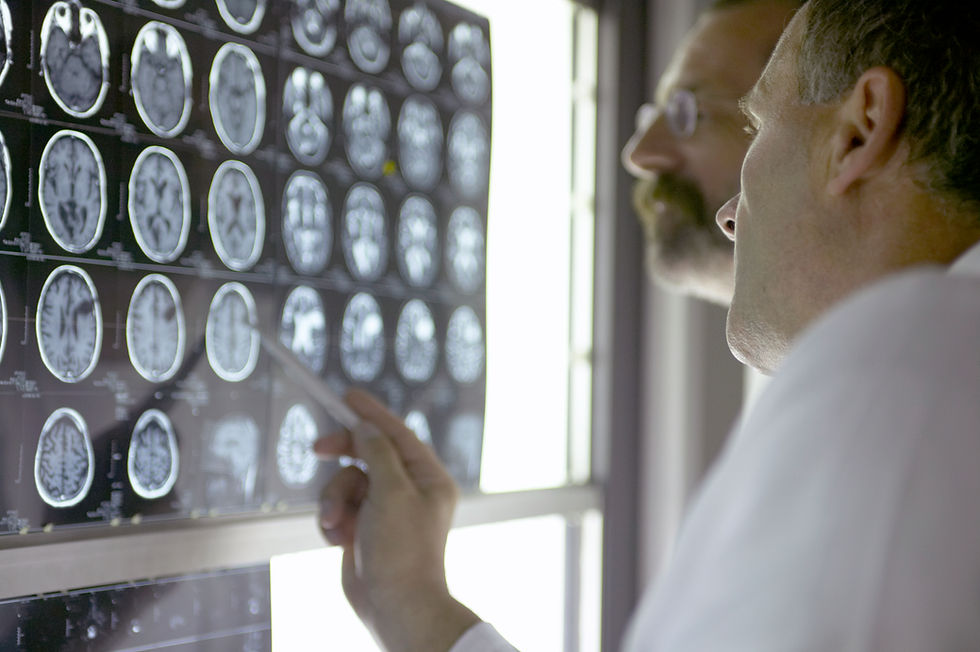
A normal CT or conventional MRI scan does not, by itself, exclude mild traumatic brain injury.
CT imaging is primarily used in the acute assessment of head injury to identify clinically important abnormalities, including intracranial bleeding and other injuries requiring urgent medical attention.
As recognised in NICE guideline NG232: Head injury — assessment and early management, imaging forms part of the clinical investigation of head injury, but its findings must be interpreted alongside the patient's presentation.
Concussion and mild traumatic brain injury can occur without abnormalities being identified on conventional structural imaging. The diagnosis therefore depends upon the clinical circumstances of the injury, including evidence of an acute disturbance of brain function, rather than solely upon whether a scan reveals a visible lesion.
Relevant evidence may include an alteration in consciousness, confusion, disorientation, post-traumatic amnesia or other neurological findings associated with the injury.
However, two questions must be distinguished.
The first is whether the individual sustained a mild traumatic brain injury.
The second is whether cognitive difficulties reported months or years later are attributable to that injury.
Establishing the first does not automatically establish the second.
Why Can Cognitive Symptoms Persist After Mild Traumatic Brain Injury?
Many individuals recover well following mild traumatic brain injury, but some experience symptoms that persist beyond the usual early recovery period.
These may include difficulties with concentration, memory, information processing and mental stamina, alongside headaches, sleep disturbance, irritability or changes in mood.
Such difficulties can substantially affect everyday functioning, particularly where an individual is attempting to return to a demanding occupation.
However, these symptoms are not specific to traumatic brain injury.
Concentration, memory efficiency and mental stamina can also be affected by persistent pain, poor sleep, medication, depression, anxiety, post-traumatic stress symptoms and other medical or psychological conditions.
These factors may coexist with genuine neurological injury rather than represent mutually exclusive explanations.
For example, an individual may experience cognitive disruption immediately following an injury and subsequently develop persistent headaches, disturbed sleep and anxiety about their recovery.
The resulting cognitive presentation may reflect several interacting influences.
A comprehensive neuropsychological assessment considers these possibilities rather than assuming that all reported difficulties must have a single cause.
Reported Cognitive Symptoms and Measurable Impairment
One of the central challenges in these cases is distinguishing between the individual's experience of cognitive difficulty and impairment identified through formal assessment.
A claimant may describe substantial forgetfulness yet perform within expected limits on standardised tests of learning and memory.
This does not necessarily mean that the reported difficulties are unimportant or that they are not being experienced.
For example, an individual who experiences fatigue or reduced concentration may have difficulty registering information during everyday activities. The subsequent inability to recall that information may be experienced as poor memory, even where memory retention itself remains relatively intact.
Alternatively, the structured conditions of a formal assessment may differ considerably from the demands of a busy workplace or family environment.
Conversely, below-expected performance on cognitive testing does not automatically establish traumatic brain injury as the cause.
Test performance may be influenced by premorbid abilities, psychological factors, pain, fatigue, medication, language and other relevant circumstances.
A neuropsychological assessment must therefore distinguish between the difficulties reported, the pattern of cognitive abilities identified and the extent to which those findings can reasonably be attributed to the injury.
This distinction is explored further in Memory Difficulties After Brain Injury: What Neuropsychological Assessment Can Tell Us.
Can Neuropsychological Testing Establish That a Brain Injury Occurred?
Neuropsychological assessment provides detailed information about cognitive functioning, but it cannot independently establish that a traumatic brain injury occurred.
There is no single neuropsychological test, or distinctive combination of test scores, that reliably identifies a previous mild traumatic brain injury in an individual claimant.
Difficulties involving attention, processing speed, memory or executive functioning may occur following neurological injury, but they are not unique to it.
Similar patterns may be associated with other neurological conditions, psychological difficulties, medical problems or longstanding individual differences. For this reason, neuropsychological assessment should not be treated as a retrospective diagnostic test for concussion. Evidence concerning the original injury remains important.
The neuropsychologist may consider contemporaneous accident and medical records, the nature of any acute symptoms, the subsequent clinical course and the relationship between the reported difficulties and the wider medical evidence.
Assessment can then help establish whether cognitive impairment is present, characterise its nature and consider the extent to which the overall findings are consistent with the proposed explanation.
A clinically plausible pattern of impairment may contribute to the interpretation, but it does not independently prove causation.
Equally, the absence of measurable cognitive impairment does not establish that the claimant never sustained a mild traumatic brain injury.
The Importance of Symptom Development Over Time
The chronology of cognitive symptoms can be particularly informative. It may be relevant whether difficulties were documented shortly after the injury, how they developed over subsequent weeks and months, and whether their severity changed alongside other medical or psychological symptoms.
A claimant who experienced immediate cognitive disturbance followed by gradual improvement presents a different clinical history from someone whose cognitive complaints first became prominent many months later.
That distinction does not necessarily determine the cause of the difficulties.
Delayed recognition, increasing occupational demands or changes in other symptoms may influence when problems become apparent.
However, the sequence of events forms an important part of the clinical analysis.
Contemporaneous medical records may be considered alongside later accounts of symptoms and evidence of functioning at work or home.
Where accounts differ, the expert must explain the significance of any inconsistencies without assuming that every discrepancy reflects deliberate misrepresentation. The objective is to develop an evidence-based understanding of how the presentation emerged and changed over time.
Understanding Pre-Injury Cognitive Functioning
Formal neuropsychological assessment ordinarily takes place after the injury, when the claimant's previous cognitive abilities can no longer be measured directly.
Interpretation therefore requires consideration of likely premorbid functioning.
Educational achievements, occupational history, previous medical conditions and longstanding difficulties may all contribute to an understanding of cognitive abilities before the relevant event.
This is particularly important where cognitive scores fall within the broad average range.
For an individual whose previous abilities were substantially above average, an average test score might represent a meaningful reduction. For another individual, similar performance may be consistent with their previous functioning. However, estimates of premorbid ability are necessarily imperfect.
A difference between estimated previous ability and current test performance does not automatically establish an acquired deficit, nor does an identified deficit necessarily establish its cause.
The findings require interpretation in the context of the full clinical history and the reliability of the available evidence.
Performance Validity and the Reliability of Cognitive Findings
An important element of neuropsychological assessment, particularly where findings may be used in litigation, is the evaluation of performance validity.
Performance validity testing helps establish whether cognitive test results provide a reliable estimate of the individual's abilities. The interpretation of these measures requires specialist knowledge and consideration of the wider assessment findings.
Performance that does not meet established validity criteria may limit the conclusions that can reasonably be drawn from the affected cognitive test results.
However, an invalid result is not, by itself, proof of deliberate exaggeration or malingering.
The significance of validity findings depends upon the measures used, the pattern of results, relevant clinical factors and the available contextual evidence. Equally, satisfactory performance validity does not establish that any identified cognitive weakness was caused by traumatic brain injury.
Performance validity concerns the interpretability of the assessment findings. Causation is a separate clinical question requiring consideration of the wider evidence.
These distinctions are particularly important where the nature, severity or cause of cognitive impairment is disputed.
Normal Cognitive Test Performance and Everyday Difficulties
A claimant may report substantial difficulty managing employment or daily responsibilities despite performing within expected limits on formal cognitive testing.
Such findings require careful interpretation.
Standardised tests assess cognitive abilities under relatively controlled conditions. They cannot reproduce every aspect of an individual's daily environment, particularly where performance depends upon sustained effort, competing demands, time pressure or prolonged mental activity. Cognitive fatigue may be particularly relevant.
An individual may complete a relatively brief task successfully but struggle to sustain comparable performance over a full working day.
However, reported difficulties in everyday life cannot automatically be attributed to
neurological impairment simply because conventional cognitive tests do not capture them.
Assessment must consider the consistency of the reported functional problems, the demands of the relevant activities and other factors that may influence performance.
Information from occupational records, rehabilitation professionals or people familiar with the claimant's everyday functioning may assist where appropriate.
The distinction between measured cognitive impairment and functional difficulty is therefore not simply a question of deciding which account is correct.
Both forms of evidence may be relevant, but neither should be interpreted beyond what it can reasonably establish.
The relationship between mental fatigue and sustained everyday functioning is considered further in Cognitive Fatigue After Brain Injury: Understanding Its Impact in Medico-Legal Cases.
When Several Factors Contribute to Cognitive Difficulties
Persistent symptoms following mild traumatic brain injury do not always fit neatly into a distinction between neurological and psychological causes. A claimant may experience persistent headaches, disrupted sleep, anxiety about returning to work and reduced confidence in their cognitive abilities. Each factor may influence concentration and mental stamina while also interacting with the others.
For example, difficulty concentrating may increase frustration and anxiety, which can further interfere with performance. Fatigue may become more pronounced when everyday activities require sustained effort.
A neuropsychological formulation seeks to understand these relationships and evaluate the evidence supporting different explanations.
It may be possible to conclude that an injury contributed to the development of a complex presentation without being able to attribute every current symptom to persistent neurological dysfunction.
Alternatively, the evidence may indicate that current cognitive difficulties are more convincingly explained by factors other than ongoing neurological impairment.
The expert's responsibility is to distinguish between conclusions supported by the evidence, reasonable clinical interpretations and matters that remain uncertain. The presence of multiple contributing factors does not make symptoms less significant. It makes careful attribution more important.
Prognosis and Long-Term Cognitive Functioning
Questions about prognosis can be difficult where symptoms have continued for a substantial period following mild traumatic brain injury. Although many people recover well, outcomes vary and can be influenced by neurological, psychological, medical and social factors.
The presence of persistent symptoms does not necessarily establish permanent neurological impairment. Equally, the passage of time alone does not determine whether an individual will experience further improvement.
A neuropsychological opinion on prognosis may consider the nature and duration of symptoms, the pattern of assessment findings, the clinical history, previous response to treatment or rehabilitation and relevant research evidence.
The conclusions should reflect the strength and limitations of that evidence.
In some cases, it may be possible to identify factors likely to influence future functioning without being able to predict the precise extent or timing of recovery.
Particular care is required when distinguishing the likely course of reported symptoms from the prognosis for objectively demonstrated cognitive impairment. These may overlap, but they are not necessarily identical.
The Value of Neuropsychological Evidence Where Causation Is Disputed
Cases involving mild traumatic brain injury, normal structural imaging and persistent cognitive complaints can present genuine diagnostic and evidential uncertainty.
Neuropsychological assessment may assist by providing a detailed account of current cognitive functioning, identifying the extent and pattern of any measurable impairment and examining the relationship between reported difficulties and everyday activities.
It can also contribute to the consideration of alternative or interacting explanations, including pain, sleep disturbance, fatigue and psychological symptoms.
However, its conclusions must be integrated with the evidence concerning the original injury, the subsequent clinical course and other relevant medical opinions. Neuropsychology cannot establish causation from test results alone.
A reasoned opinion may support a relationship between the injury and particular cognitive consequences, identify a more complex combination of contributing factors, or explain why the available evidence does not permit reliable attribution.
The value of specialist evidence lies not in producing a predetermined conclusion, but in providing a careful and independent interpretation of what the evidence does — and does not — establish.
For a broader introduction to persistent symptoms following concussion, see Persistent Post-Concussion Symptoms: When Is Neuropsychological Assessment Helpful?.
Further Information
Dr Vikki Hunkin is a Consultant Clinical Neuropsychologist providing independent expert witness services for solicitors, insurers and medico-legal organisations throughout England and Wales.
Her practice focuses on adults aged 16 years and over and includes neuropsychological assessment and medico-legal reporting in personal injury, clinical negligence and capacity matters. Reports are prepared in accordance with CPR Part 35.
Her medico-legal work includes complex and disputed cases involving subtle cognitive difficulties, diagnostic uncertainty and questions of causation.
Solicitors considering whether neuropsychological evidence may assist in a case involving mild traumatic brain injury or persistent cognitive symptoms are welcome to discuss the suitability of an assessment before formal instruction.
For further information about expert witness services, see the For Solicitors page.